Behind the Scenes
Ocean Resin Art Explained: How Handmade Resin Coasters Bring the Beach Home
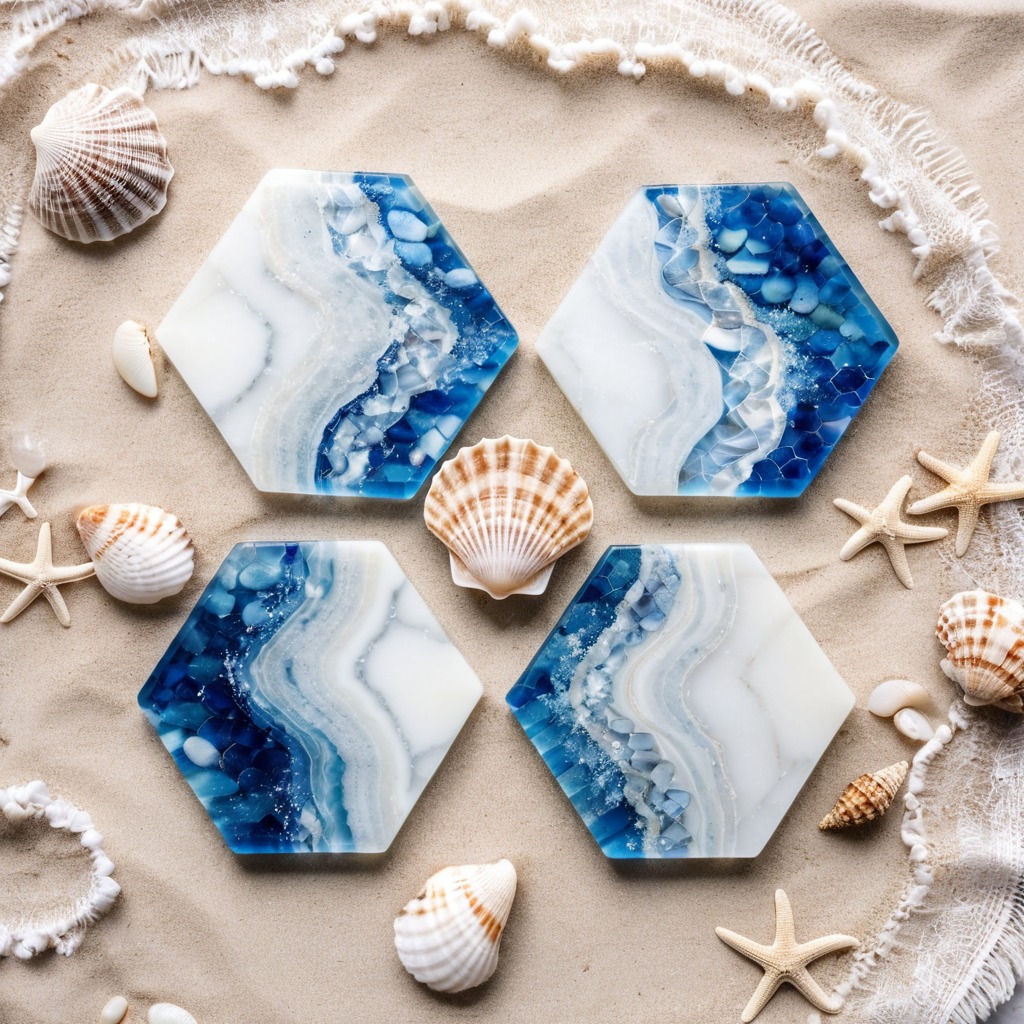
You’ve seen them on Instagram and Pinterest: those mesmerizing coasters that look like a tiny piece of ocean was frozen in time. Blue and white waves curl over embedded seashells and golden sand, creating miniature seascapes that double as functional drinkware protection.
But how are they actually made? And what separates genuine handmade resin art from the mass-produced knockoffs flooding Amazon?
Let’s break it down.
What Is Resin Art?
Epoxy resin is a two-part liquid (resin + hardener) that, when mixed, undergoes a chemical reaction and cures into a hard, glass-clear solid. Artists discovered that by adding pigments, objects, and careful layering techniques, they could create stunning three-dimensional effects trapped inside this crystal-clear medium.
Ocean resin art specifically uses:
- White pigment manipulated with a heat gun to create foam and wave crests
- Blue/teal pigments in varying concentrations for depth
- Real seashells and sand embedded between layers
- Metallic powders for that subtle shimmer you see in real ocean water
The result is a functional piece of art that captures the motion of the sea in a permanently solid form.
The Layer-by-Layer Process
Creating ocean resin coasters isn’t a one-step pour. It’s a multi-day process:
Day 1: The Base Layer
The artisan pours a thin layer of crystal-clear resin into silicone molds. Real sand is sprinkled into this base, along with carefully placed seashells, dried starfish fragments, or sea glass. This layer cures overnight.
Day 2: The Ocean Layer
This is where the magic happens. The artisan mixes several batches of resin:
- Deep blue (the “deep water”)
- Medium teal (the “shallow water”)
- White (the “foam”)
These are poured in strategic patterns, then manipulated with a heat gun. The heat causes the white pigment to move through the blue, creating organic cell patterns that mimic real ocean foam. Every pass of the heat gun creates unrepeatable patterns.
Day 3: The Clear Top Layer
A final clear coat seals everything, creating a smooth, glossy surface. This layer also provides the heat resistance and waterproofing that makes the coasters functional, not just decorative.
Day 4-5: Curing and Finishing
Full cure takes 24-48 hours depending on temperature. After curing, each coaster is demolded, edges are sanded smooth, and cork or felt backing is applied to protect furniture surfaces.
Why No Two Are Identical
This is the key difference between handmade resin art and factory products: fluid dynamics are inherently unpredictable.
When the artisan passes a heat gun over wet resin, the pigments respond to:
- Exact temperature at that moment
- Humidity in the workshop
- Ratio of pigment to resin (which varies slightly each mix)
- Speed and angle of the heat gun pass
- How long between layers
Even the same artisan, using the same materials, on the same day, will produce four coasters that look related but are each unique. Like siblings, not clones.
This is why mass-produced “resin coasters” from factories look flat and lifeless. They use mold-injection with pre-mixed colors - no fluid dynamics, no organic movement, no surprise.
Practical Questions About Resin Coasters
Are they heat-resistant?
Yes. Properly cured epoxy resin withstands temperatures up to 120°F (50°C) without damage. Hot coffee, warm tea, and iced drinks are all fine. We wouldn’t recommend placing a pot straight from the stove on them, but that’s true of any coaster.
Do they scratch?
Epoxy resin has a hardness similar to human fingernails (about 80 on the Shore D scale). Normal daily use won’t scratch them. Dragging ceramic mugs aggressively might leave faint marks over years, but they remain functional indefinitely.
How do you clean them?
Wipe with a damp cloth. For sticky spills, mild soap and water. Don’t use abrasive cleaners or acetone (which can cloud the surface). That’s it.
Will the colors fade?
Quality resin coasters use UV-resistant pigments and a UV-stabilized resin formula. They won’t yellow or fade in normal indoor conditions. Direct sunlight for extended periods (like a windowsill) might cause very gradual yellowing over years, but indoor placement is perfectly fine.
Who Buys Ocean Resin Coasters?
Based on our experience, these are the most common buyers:
For themselves:
- People who love coastal/beach aesthetics but live inland
- Home decor enthusiasts looking for unique conversation pieces
- Renters who want to add personality without wall damage
- Coffee table enthusiasts (yes, it’s a thing)
As gifts:
- Housewarming presents that are both useful and beautiful
- Birthday gifts for the “person who has everything”
- Thank-you gifts for hosts after beach vacations
- Bridesmaids gifts for coastal-themed weddings
- Father’s Day gifts for dads with home bars
How Ocean Resin Coasters Fit Into Different Decor Styles
You might think these only work in a “beach house” aesthetic. Not true.
Minimalist/Modern
The coasters provide a controlled pop of color against white or neutral surfaces. One set of four on a clean white coffee table becomes the focal point without cluttering the space.
Bohemian/Eclectic
Layer them with other natural materials - wooden trays, macrame, dried flowers. The organic shapes complement the “curated chaos” of boho style.
Mid-Century Modern
The clean, smooth finish and jewel-tone blues pair naturally with walnut wood furniture and brass accents typical of MCM interiors.
Industrial/Masculine
On a concrete or metal desk, the coasters soften the hard edges. The blue tones provide warmth in an otherwise cool-toned space.
The Difference Between $8 and $28 Coasters
Let’s be direct about pricing. You can find “resin coasters” online for $8 a set. Here’s what you’re getting at that price point:
| Feature | Factory ($8) | Handmade ($28) |
|---|---|---|
| Technique | Injection mold | Multi-day hand-poured |
| Shells/sand | Printed image or plastic | Real natural specimens |
| Color depth | Flat, single-plane | Multi-layer 3D effect |
| Uniqueness | Identical copies | Each one unique |
| UV stability | Often yellows in months | UV-stabilized formula |
| Edge finish | Rough mold seams | Hand-sanded smooth |
| Backing | None or thin sticker | Cork/felt protective pad |
The $8 versions look acceptable in photos. In person, the difference is immediately obvious. Factory coasters feel like printed plastic. Handmade resin coasters have depth - you can literally see into the layers, like looking into actual water.
Caring for Your Resin Coasters
Long-term care is minimal:
- Daily: Just use them. Set your drinks down without worry.
- Weekly: Wipe with a damp cloth if needed.
- Monthly: Nothing special required.
- Yearly: If you want extra shine, a tiny drop of mineral oil buffed with a microfiber cloth will restore the day-one gloss.
That’s it. No sealing, no re-coating, no delicate handling required.
Bringing the Ocean Home
There’s something deeply calming about ocean imagery. Research in environmental psychology shows that blue spaces (water views, aquatic imagery) reduce stress and improve mood - a phenomenon called “blue mind theory.”
You might not have a beachfront apartment. Most of us don’t. But having a small, tangible piece of ocean artistry on your desk or coffee table creates a micro-moment of calm every time you reach for your drink.
That’s the real value of handmade ocean resin art. Not just that it protects your furniture. Not just that it sparks conversation. But that it brings a sliver of coastal tranquility into wherever you actually live.
View Ocean Resin Coaster Set →
Interested in other handmade decor pieces? Browse our full collection of custom home decor and gifts.